







OUR RESPONSIBLE
MATERIALS

OUR RESPONSIBLE
MATERIALS
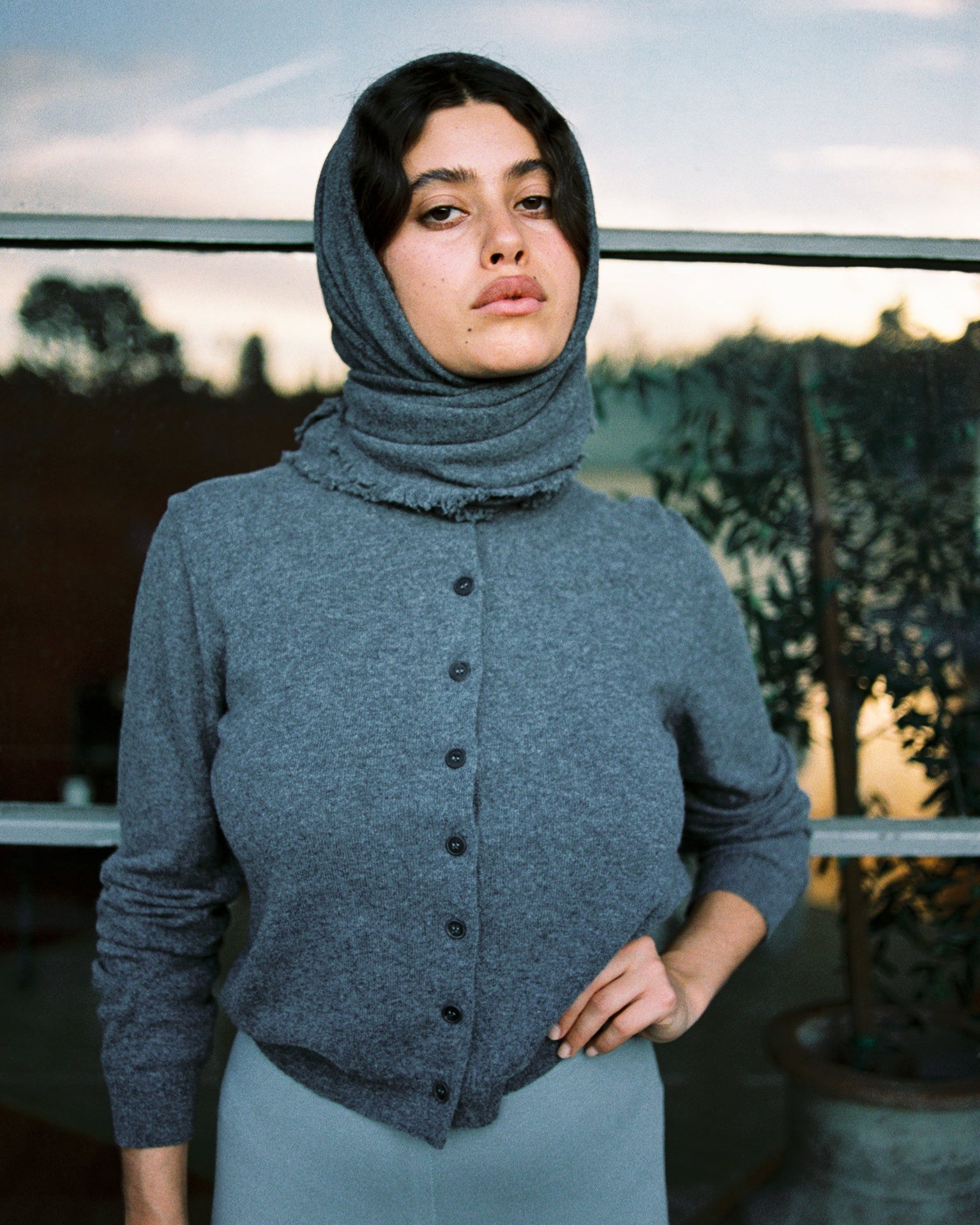
Every fiber used at Tricot meets a double requirement: what it brings to the piece, and what it costs to produce. Recycled cashmere, mulesing-free wool, superior 140's wool: three materials, three logics, three distinct uses. Each piece receives the material that matches what it needs to do — in wear, over time, in its relation to the season. That upstream choice determines quality downstream.

CASHMERE
RECYCLED
Tricot cashmere comes from two sources. Pre-consumer: yarns from dormant stocks and production surplus, never worn, never transformed. The fiber is intact, its quality identical to that of new yarn. Only its path differs. Post-consumer: cashmere garments collected at end of life, disassembled by hand, untangled fiber by fiber. Unwanted materials are removed. The remaining fibers are sorted by quality, by strength, then by natural color — to avoid additional dyeing and reduce the chemical impact of the process.
These recycled fibers are paired with 35 % virgin cashmere, where regeneration alone is not yet enough to guarantee yarn regularity. This blend produces a more stable, denser knit, cleared of the most fragile fibers. The properties are intact: softness, lightness, thermal regulation. The difference lies in what did not need to be produced.

THE WOOL
CERTIFIED
Some Tricot pieces contain wool — a material chosen for what it alone brings: structure, strength, hold under intensive wear. The wool used is mulesing-free, from flocks raised without this controversial farming practice. It is certified GRS 4.0 — an independent certification that guarantees the traceability of the fiber from its source to the finished product. An audited, renewed verification.
Depending on the piece, it represents between 50 % and 90 % of the composition, always paired with a share of recycled cashmere. Fine 140's wool, the airiest in the range, offers a hand-feel close to lightweight cashmere — without irritating, without weighing down. Dense mulesing-free wool structures the most constructed pieces, such as the worker jacket or the cable cardigan, while keeping comfort in wear.

TRICOT COLORAMA
Seventeen colors. A chromatic vocabulary built to last in a wardrobe. The foundational neutrals: Off-White, Sand, Grey, Dark Grey, Dark Navy, Black, Kaki, Brown.
Tones that integrate everywhere, worn alone or layered, without dating. Character colors: Rosa, Indian Pink, Havana, Yellow Lime, Nina Red, Ocean Blue, Leo Purple, Green. Assertive shades, produced in controlled quantities, renewed each season according to dye availability.
Each color is thought in relation to the material. Recycled cashmere absorbs dye differently from virgin cashmere — the tones are slightly less saturated, more natural, closer to the fiber. It is a signature.

DYEING
Tricot yarn is dyed before knitting — a technique called yarn dyeing, or hank dyeing. Color penetrates each fiber evenly before it is worked. The result: a deeper shade, more stable over time, less prone to fading and to variations in finish across the piece.
This technique is more demanding at the spinning stage — it requires upstream planning and mastery of dye baths on recycled fibers with variable properties. It is what guarantees chromatic consistency from one piece to the next, and the hold of colors season after season.

ECOLOGICAL YARN
Tricot recycled cashmere fibers are sorted by natural color before spinning. This upstream sorting makes it possible to produce certain colors — natural tones, beiges, greys — without dyeing. Fewer baths, fewer chemicals, less water used. A process economy that follows directly from the rigorous sorting at the recycling stage.
For dyed colors, the manufacture works with certified dyes, in line with European environmental standards. Water used in the process is treated before discharge. Every stage of the chain — from fiber sorting to yarn dyeing — is designed to reduce what can be reduced, while holding the quality of the result.
IMPACT
ENVIRONMENTAL
IMPACT
Virgin cashmere is one of the most resource-intensive fibers in the textile industry. Raising goats, pasture degradation, water use, methane emissions, fiber transport: every piece carries a hidden cost, rarely shown. At Tricot, we choose to show it.