


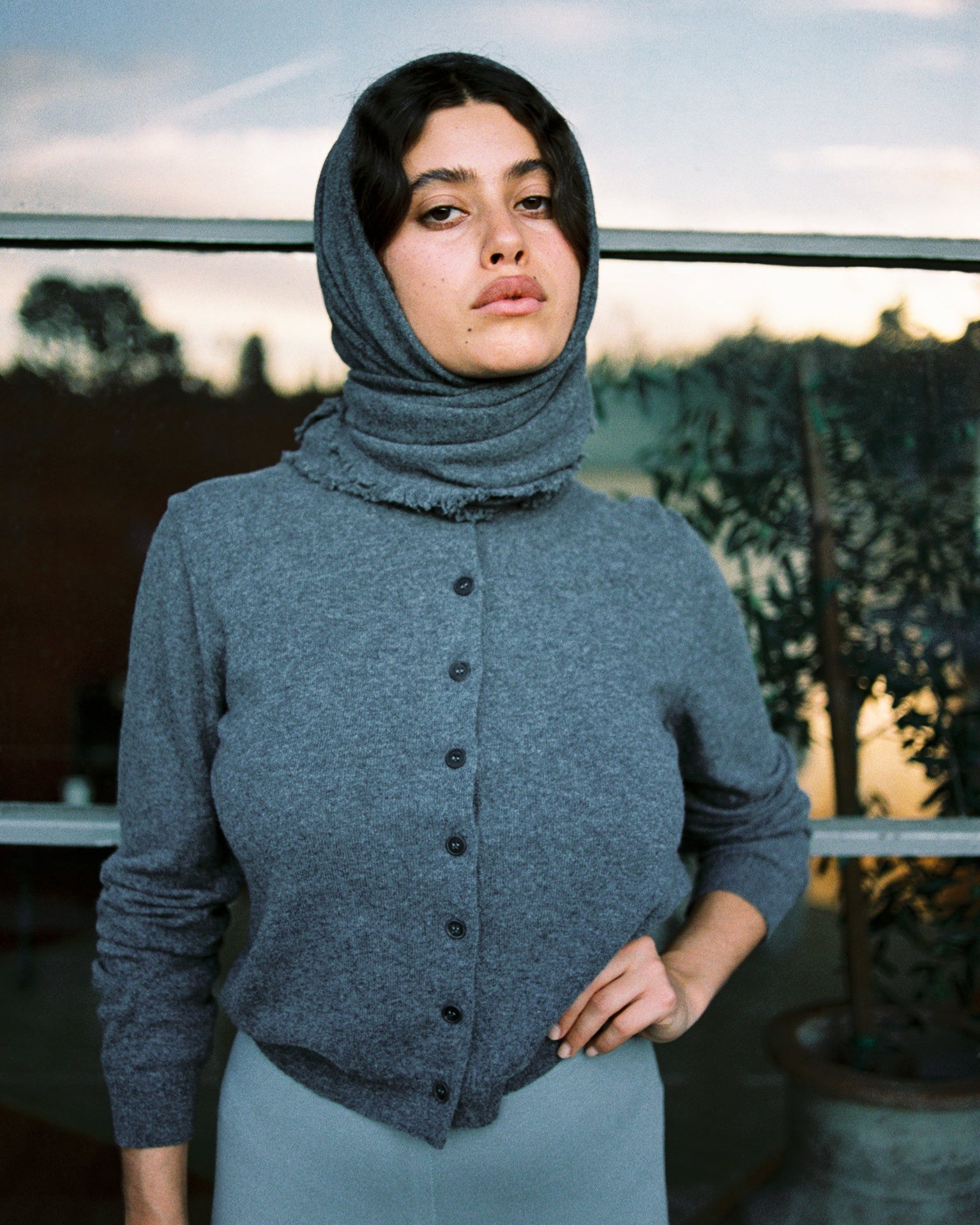





RECYCLED CASHMERE

65% RECYCLED
35% VIRGIN
Recycled cashmere is a stance. 65 % regenerated fibers, 35 % virgin cashmere: a material with its properties intact, produced differently.
Tricot cashmere comes from two distinct sources.

PRE
CONSUMER
Pre-consumer: yarns from dormant stocks and production surplus, never worn, never transformed. These materials already exist; they were produced, spun, sometimes dyed, then immobilized in warehouses for lack of an outlet. Recovering them gives them a destination while leaving goat herds untouched. The fiber is intact; its quality is identical to that of new yarn. Only its path differs.

POST
CONSUMER
Post-consumer: cashmere garments collected at end of life, disassembled by hand, untangled fiber by fiber. The process is meticulous. Seams are undone, unwanted materials removed one by one. The remaining fibers are sorted by quality and strength — only the finest and most robust are kept. They are then sorted by natural color, to avoid additional dyeing and reduce the chemical impact of the process. A worn garment does not disappear: it becomes material again.

SUPERIOR YARNS
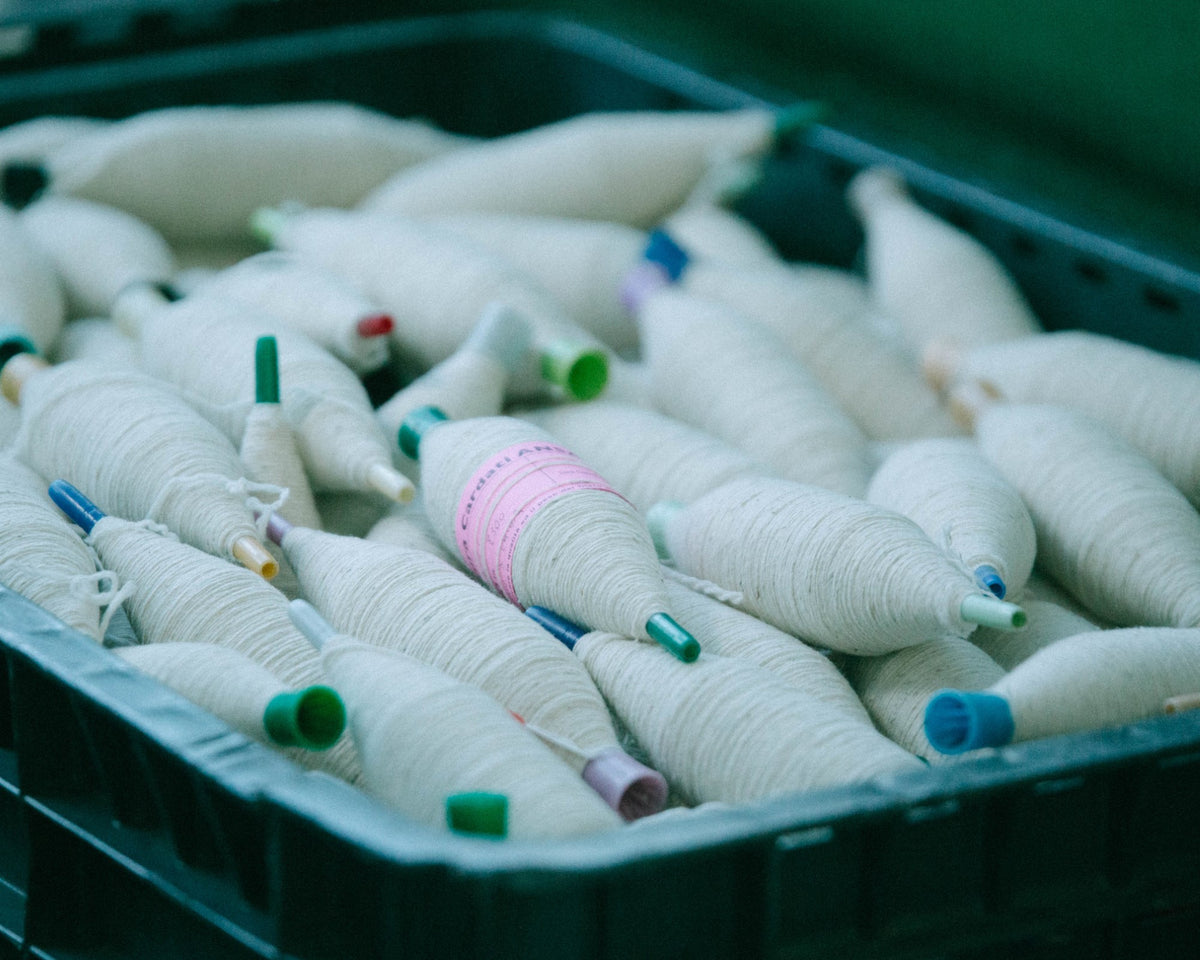
Spinning is the invisible stage. The one that precedes everything and on which everything depends. In Florence, in a region whose textile expertise goes back several centuries, cashmere fibers — recycled and virgin — are turned into yarn.
Recycled cashmere is harder to spin than virgin. Fibers from multiple sources and different garments present variable lengths and strengths. Homogenizing them to produce a consistent yarn demands precise know-how: tension control at every pass, a fine reading of irregularities, constant vigilance on the density of the yarn produced. An irregular yarn shows in the knit, in the drape, in the lifespan of the piece.
Selecting this partner is a quality choice, made upstream of everything else. This is where the material becomes the yarn that will then arrive in Venice, ready to be knitted, linked, and finished by hand.
LIKE
LOGIC
ECOLOGY
Virgin cashmere is one of the most resource-intensive fibers in the textile industry. Raising goats, pasture degradation, water use, methane emissions, fiber transport: every piece carries a hidden cost, rarely shown. At Tricot, we choose to show it.

MATERIALS
Three materials, one shared standard. A mulesing-free wool, from respectful farming, soft and durable for everyday wear. A superior 140's wool, fine and dense, chosen for its hold and immediate comfort. A recycled cashmere, composed of 65% recycled fibers, certified GRS 4.0.
Each fiber is selected for its softness, quality, and lasting over time.

COLORS
Tones built to last in a wardrobe — neutrals deep enough to stay current, colors precise enough to hold their place. Each shade is produced in controlled quantities, within a tight selection renewed each season